Years ago, a reader named John sent me a question that still comes up regularly.
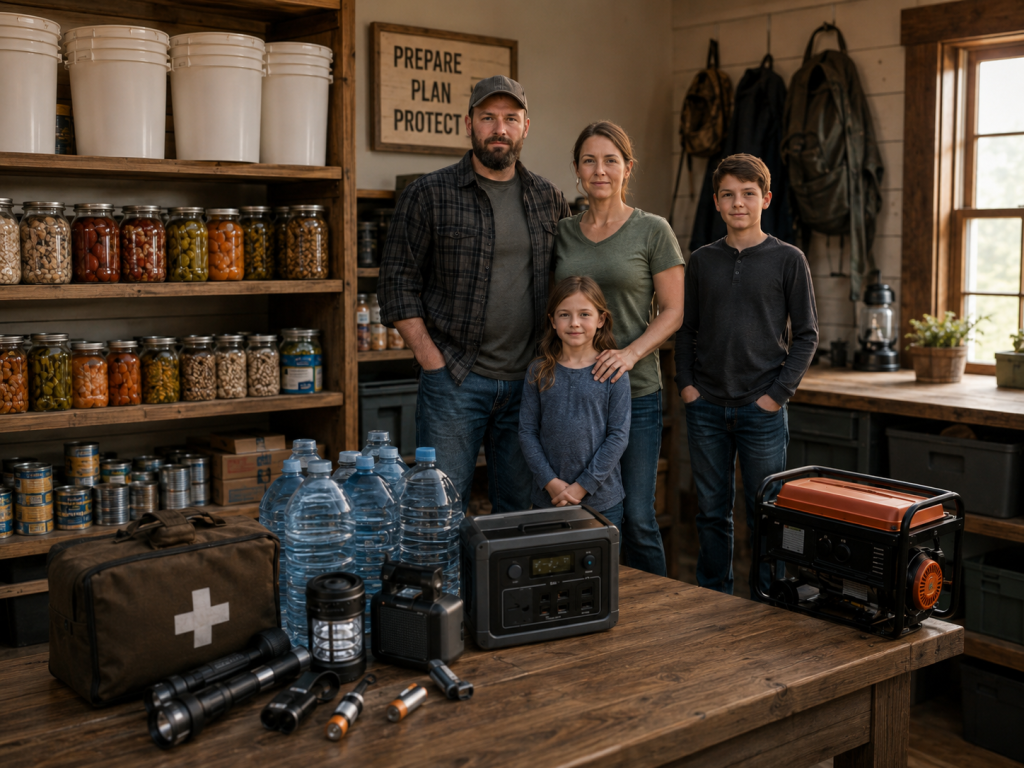
John had a paid-off home sitting on two acres. He had a wife, two young children, a steady job, and approximately $15,000 that he was willing to spend on preparedness.
He was concerned about a serious economic collapse and wanted to get his family prepared within one month. He did not want to buy two cans of soup this week and another bag of rice next week. He wanted to make real progress quickly.
His question was simple:
If you had a family of four, no preparedness supplies, one month to get ready, and a budget of $15,000, what would you buy?
Here is how I would answer that question today.
Disclosure: Some links in this article are affiliate links. If you purchase through one of these links, I may earn a commission at no additional cost to you.
Do Not Spend the Entire $15,000 on Gear
The first thing I would tell John is not to spend every dollar on food buckets, generators, radios, and other equipment.
If you are worried about an economic collapse, recession, job loss, inflation, bank problems, or shortages, then money itself is part of your preparedness plan.
A household with six generators, a mountain of freeze-dried food, and no money to repair the car or pay the property taxes is not financially prepared.
I would keep part of the $15,000 as an emergency reserve.
That reserve could help cover:
- Loss of income
- Vehicle repairs
- Home repairs
- Medical bills
- Insurance deductibles
- Unexpected travel
- Property taxes and utility bills
- Last-minute supplies during a developing emergency
I would keep some physical cash at home in small bills, but I would not keep the entire reserve hidden under the mattress. How much you keep at home depends on your situation, security, and comfort level.
How I Would Divide the $15,000
This would be my approximate starting budget:
- $3,000: Emergency savings and cash reserve
- $3,200: Food storage
- $1,100: Water storage and purification
- $2,700: Backup power, lighting, and emergency heat
- $900: Medical and first-aid supplies
- $800: Sanitation and hygiene
- $600: Communications and information
- $1,000: Gardening, tools, and food production
- $900: Home security, fire safety, and training
- $800: Unassigned contingency money
Total: $15,000
These figures are not carved in stone. A family with a wood stove, private well, large garden, and several months of savings would divide the money differently from a family starting with nothing.
The important thing is to avoid spending most of the budget in one area while ignoring everything else.
Start With a Three-Month Goal
John wanted six months or more of supplies immediately. That is a reasonable long-term goal, but I would first make sure the family could handle three months without regular shopping.
Once the three-month supply was organized and tested, I would expand it toward six months.
Do not confuse a company’s advertised number of “servings” with the number of calories your family actually needs.
A tiny serving of rice or powdered soup may count as one serving on a product label, but it is not necessarily a meal.
Use the nutrition label and count total calories.
For a rough planning figure, four people consuming an average of 2,000 calories per day for six months would require approximately:
4 people × 180 days × 2,000 calories = 1,440,000 calories
Your actual needs will vary by age, health, body size, climate, workload, and activity level. Growing children, people doing heavy physical work, and anyone exposed to cold weather may require more food than expected.
Build a Balanced Food Supply
I would not spend the entire food budget on one giant stack of commercial emergency-food buckets.
I prefer a combination of three types of food:
- Normal shelf-stable foods the family already eats
- Basic dry staples packaged for long-term storage
- Commercial freeze-dried or dehydrated foods for convenience
Everyday Shelf-Stable Foods
Start with foods your family already knows how to prepare and enjoys eating:
- Canned meat
- Canned vegetables
- Canned fruit
- Soups and stews
- Pasta and pasta sauce
- Peanut butter
- Crackers
- Oatmeal
- Breakfast cereal
- Powdered or shelf-stable milk
- Coffee and tea
- Cooking oil
- Salt, sugar, herbs, and spices
- Comfort foods and hard candy
Buy what you normally eat, place the newest purchases behind the older food, and use the oldest items first.
This is called first in, first out, or FIFO.
Long-Term Dry Staples
I would also store:
- White rice
- Dry beans
- Lentils
- Wheat berries
- Rolled oats
- Dry pasta
- Dried corn
- Powdered milk
- Sugar
- Salt
Suitable dry foods can be packaged inside Mylar bags with correctly sized oxygen absorbers and then protected inside five-gallon buckets.
Do not use oxygen absorbers with granulated sugar. They can turn it into a solid block. Keep sugar sealed and dry instead.
Commercial Emergency Food
Commercial long-term food is convenient and worth including, especially when you need to build a supply quickly.
My Patriot Supply makes up part of my own long-term food storage, and I have used and eaten a number of its products.
You can also add individual long-term staples, such as Augason Farms powdered milk, rather than depending entirely on prepackaged emergency meals.
Always examine:
- Total calories
- Protein
- Preparation requirements
- Water needed for cooking
- Fuel needed for cooking
- Ingredients and allergens
- Manufacturer storage instructions
- The actual “best by” or shelf-life claim
A food package is not useful if it requires more water and cooking fuel than you can provide.
Do Not Forget Dietary Needs
A family food plan must account for:
- Food allergies
- Diabetes
- High blood pressure
- Infant formula
- Children who will not eat unfamiliar foods
- Prescription diets
- Religious restrictions
- Pet food
Do not assume that a hungry child will automatically eat anything placed in front of him. Emergencies are already stressful enough without replacing every familiar food with powdered meals the family has never tasted.
Buy several samples and cook them before ordering a year’s supply.
Water Storage and Purification
Food receives most of the attention, but water is more urgent.
The CDC recommends storing at least one gallon of water per person per day for three days and trying to build a two-week supply when possible.
For a family of four, a two-week supply would be:
4 people × 14 days × 1 gallon = 56 gallons
That is the minimum planning figure for drinking, cooking, brushing teeth, and limited sanitation. Hot weather, illness, pregnancy, pets, and strenuous work can increase your needs.
I would use the water budget for:
- Unopened commercially bottled water
- Food-grade storage containers
- Several smaller portable containers
- A gravity-fed water filter
- Replacement filter elements
- Water-treatment chemicals
- A metal pot for boiling water
- A way to collect additional water
A ProOne gravity water filter is one option for household use.
Do not depend entirely on one filter. Filters can clog, break, freeze, or fail. Keep more than one treatment method and understand what each method does and does not remove.
Never use old milk jugs for serious long-term storage. The plastic is thin, the seams can fail, and cleaning every trace of milk residue is difficult.
Use containers intended for food or water storage.
Backup Power and Emergency Lighting
I would not spend $4,000 or $5,000 on backup power before taking care of food, water, medical supplies, and emergency savings.
Start by listing what actually needs electricity.
Possible essential loads include:
- Refrigerator
- Freezer
- Well pump
- Medical equipment
- Phone chargers
- Radios
- LED lights
- Internet equipment
- Fans
A portable power station can run phones, lights, radios, laptops, CPAP machines, and certain small appliances quietly and without gasoline.
A unit such as the
A unit such as the OUPES 2400-watt portable power station may be useful, but calculate your actual power needs before buying. The product name or advertised wattage does not tell you how long it will run your equipment.
A gasoline or dual-fuel generator may be more practical for large loads such as a well pump, freezer, or refrigerator.
Never operate a fuel-burning generator inside a house, garage, basement, crawlspace, carport, shed, or porch.
Operate it outside, at least 20 feet from occupied buildings, with the exhaust directed away from doors, windows, and vents. Install working carbon-monoxide alarms inside the home.
Store fuel only in approved containers and in accordance with local fire codes and the manufacturer’s directions. Keep fuel away from living areas, ignition sources, stored food, and drinking water.
Emergency Heat
A winter power outage can become dangerous much faster than most people expect.
Possible heating options include:
- A properly installed wood stove
- A professionally installed propane heater rated for the intended use
- Warm sleeping bags
- Wool blankets
- Insulated clothing
- A designated warm room
Any fuel-burning appliance creates fire and carbon-monoxide risks.
Follow the manufacturer’s instructions, keep combustible material away from the heat source, maintain ventilation where required, and install working smoke and carbon-monoxide alarms.
A wood stove is useful, but installing one properly can involve a chimney, heat shielding, permits, insurance requirements, and a dependable supply of seasoned firewood. It is not always a quick weekend project.
Medical and First-Aid Supplies
A serious medical problem will not wait until the economy improves.
I would include:
- A well-stocked family first-aid kit
- Prescription medications
- Spare eyeglasses
- Dental-care supplies
- Thermometer
- Blood-pressure monitor if needed
- Bandages and gauze
- Antiseptic
- Medical tape
- Elastic wraps
- Burn dressings
- Disposable gloves
- Over-the-counter medicines the family normally uses
- Copies of important medical information
Consider keeping printed copies of:
Books do not replace medical training. Take a first-aid and CPR course while classes, instructors, and supplies are readily available.
Sanitation and Hygiene
You do not need to guess how much toilet paper your family uses.
Write the date on a new package, use it normally, and see how long it lasts. Then multiply that amount by the number of months you want to cover.
I would store:
- Toilet paper
- Soap
- Shampoo
- Toothpaste and toothbrushes
- Dishwashing liquid
- Laundry detergent
- Feminine-hygiene products
- Diapers and wipes if needed
- Heavy-duty garbage bags
- Household disinfectant
- Unscented household bleach
- Disposable gloves
- Paper towels or washable rags
- A five-gallon bucket, lid, liners, and absorbent material for emergency toilet use
A loss of water and sewer service can create a health problem long before anyone runs out of food.
Communications and Information
During an emergency, rumors spread faster than useful information.
I would have:
- A battery-powered or hand-crank emergency radio
- Several LED flashlights
- Headlamps
- Spare batteries
- Portable phone chargers
- Printed emergency contacts
- Printed local and regional maps
- Two-way radios for nearby family communication
The Kaito Voyager emergency radio is one option.
Two-way radios such as the Wouxun KG-805G Professional GMRS Two Way Radio can be useful around a property or neighborhood.
Do not expect the maximum range printed on the box under normal conditions. Hills, buildings, trees, and terrain can greatly reduce practical range.
Agree on meeting locations and an out-of-area family contact before an emergency occurs.
Gardening and Food Production
John had two acres, which gives him options that someone in an apartment does not have.
However, buying seeds and having land does not mean you can immediately feed a family from a garden.
Gardening requires:
- Good soil
- Sunlight
- Water
- Tools
- Fencing
- Fertility
- Pest control
- Experience
- Time
I would begin with a soil test. Then I would choose a sunny, well-drained location close enough to the house and water source to be practical.
Use finished compost or properly composted manure. Do not spread fresh poultry manure directly around growing vegetables. Raw manure can contain harmful pathogens and can also add more nutrients and salt than the soil needs.
Buy basic, durable tools:
- Shovel
- Hoe
- Bow rake
- Spading fork
- Hand trowel
- Watering equipment
- Work gloves
- Pruning shears
Gardening When It Counts is a useful reference for anyone interested in producing food under difficult conditions.
I would also buy a reasonable assortment of open-pollinated garden seed, but I would not buy a giant seed vault and assume that solved the food-production problem.
Plant and learn to grow the seeds now.
Chickens, Rabbits, and Other Livestock
Chickens, ducks, and rabbits can contribute to a homestead, but they are not free food.
They require:
- Secure housing
- Feed
- Clean water
- Predator protection
- Health care
- Daily attention
- Equipment and fencing
I would not buy several species of livestock during the first month unless the family already had experience caring for animals.
Start with one manageable project. Eight laying hens are more realistic than attempting to build a chicken operation, rabbitry, orchard, and large garden all at once.
Fruit and nut trees are excellent long-term investments, but most will take years to produce meaningful harvests. Plant them now because the sooner they go into the ground, the sooner they can begin producing.
Home Security and Fire Safety
Security starts before anyone buys a weapon.
I would examine:
- Exterior door frames
- Locks and strike plates
- Window locks
- Outdoor lighting
- Visibility around doors and windows
- Fire extinguishers
- Smoke alarms
- Carbon-monoxide alarms
- Emergency escape routes
- Storage and concealment of supplies
If you choose to own firearms or other defensive tools, follow all applicable laws, obtain competent training, and store them securely away from unauthorized persons and children.
Buying a firearm does not automatically make anyone safer. Training, judgment, secure storage, maintenance, and practice all matter.
Skills Are Part of the Supply List
I would reserve part of the budget for training.
Useful skills include:
- First aid and CPR
- Food preservation
- Gardening
- Cooking from basic ingredients
- Small-engine repair
- Home maintenance
- Plumbing
- Electrical safety
- Sewing and clothing repair
- Radio communication
- Firearm safety if firearms are owned
Equipment eventually breaks, runs out, gets lost, or becomes obsolete. Skills stay with you.
A 30-Day Quick-Start Schedule
Week One: Stop the Biggest Gaps
- Create a family emergency and communication plan.
- Set aside the emergency cash reserve.
- Buy at least a three-day water supply.
- Build a 30-day food supply.
- Refill important prescriptions.
- Buy flashlights, batteries, a radio, and first-aid supplies.
- Check smoke and carbon-monoxide alarms.
Week Two: Build Depth
- Expand food storage toward 90 days.
- Build the two-week water supply.
- Buy a gravity filter and backup treatment method.
- Purchase sanitation and hygiene supplies.
- Buy cooking equipment and fuel appropriate for emergency use.
Week Three: Power, Security, and Organization
- Choose backup power based on actual electrical loads.
- Improve door, window, fire, and carbon-monoxide safety.
- Organize and label stored supplies.
- Create printed inventories.
- Set up radios and communication plans.
Week Four: Test Everything
- Turn off the main electrical breaker for a practice evening.
- Cook meals using stored food and emergency equipment.
- Practice filtering water.
- Test radios and backup lights.
- Identify what was missing or failed.
- Make the final purchases only after the test.
A practice outage will teach you more than another afternoon spent watching preparedness videos.
The Bottom Line
If I had $15,000 and needed to prepare a family of four quickly, I would not spend it all on food buckets, firearms, or a giant solar generator.
I would build a balanced system that included:
- Emergency savings
- Food the family will actually eat
- Stored water and multiple purification methods
- Backup lighting, power, cooking, and heat
- Medical supplies
- Sanitation
- Communications
- Home security
- Gardening tools and practical skills
An economic crisis may not arrive as one dramatic event where everything stops at the same time.
It may look like job losses, rising food prices, shortages, utility interruptions, failing businesses, expensive repairs, and families slowly falling behind.
A good preparedness plan helps during those ordinary hard times as well as during a large-scale disaster.
Do not try to impress people with the size of your stockpile. Build a system that your family understands, can maintain, and can actually use.
How would you divide a $15,000 preparedness budget for a family of four? Add your thoughts and suggestions in the comments below.
Discover more from The Survivalist Blog by M.D. Creekmore
Subscribe to get the latest posts sent to your email.
Leave a Reply