
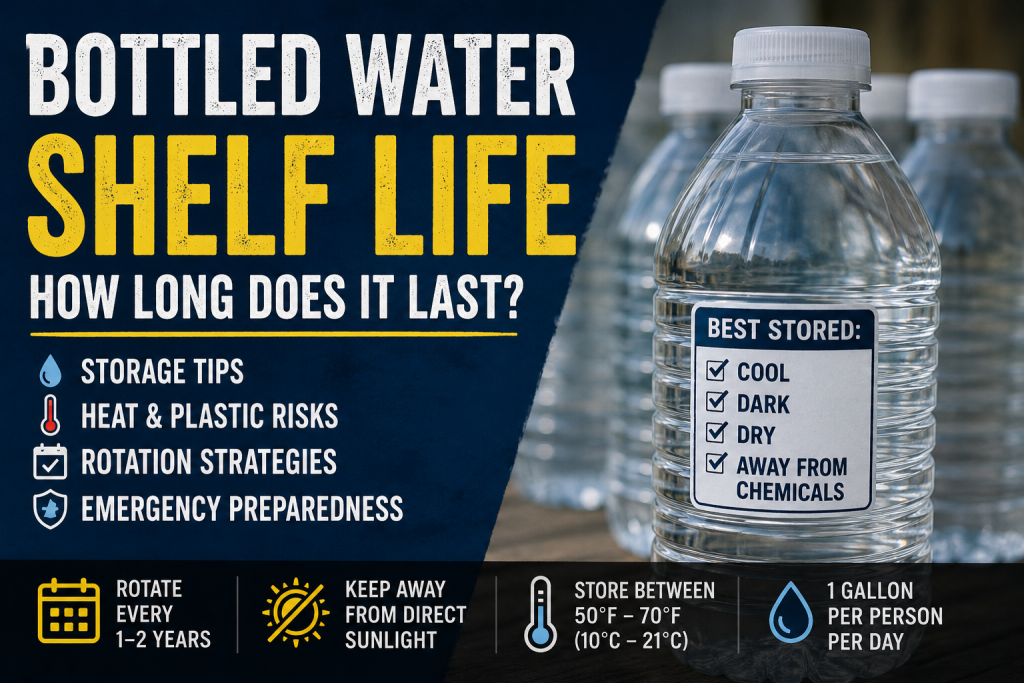
What is the shelf life of bottled water?
That is a good question and one that almost everyone who stores more than a case or two of water has probably asked.
Some people act as though bottled water becomes poisonous the day after the date printed on the bottle. Others believe it will remain perfect forever, no matter where or how it is stored.
The truth is somewhere in the middle.
Unopened, commercially bottled water can remain usable for a long time when it is stored properly. The water itself does not suddenly spoil like milk or meat, but the bottle, seal, taste, and overall quality can deteriorate over time.
The date printed on the bottle should be used as a practical rotation date. It is not necessarily a magic deadline where the water becomes unsafe at midnight. The common two-year date found on commercially bottled water is mainly intended to help with stock rotation and does not automatically mean the water is bad after that date.
Even so, I would rather rotate bottled water regularly than leave it sitting around for ten years and hope for the best.
Is Old Bottled Water Safe to Drink?
Generally speaking, unopened bottled water that has been stored in a cool, dark location and still has an intact bottle and seal may remain drinkable beyond its printed date.
Before drinking older bottled water, inspect it carefully.
Do not use it if:
- The bottle is leaking, swollen, cracked, or badly crushed.
- The cap or safety seal is loose or damaged.
- The water is cloudy or contains floating material.
- The water smells strange.
- It has an unusual chemical or plastic taste.
- The case has been contaminated by gasoline, pesticides, cleaners, sewage, floodwater, or other chemicals.
When in doubt, throw it out.
During a serious emergency, questionable water may sometimes be treated, filtered, or boiled, depending on the suspected contamination. However, boiling does not remove gasoline, pesticides, heavy metals, or many other chemicals. Never assume that boiling makes chemically contaminated water safe.
The U.S. Food and Drug Administration regulates commercially bottled water as a food product and requires bottlers to follow sanitary processing, testing, bottling, and handling procedures.
How to Store Bottled Water Properly
Storage conditions matter more than most people realize.
Keep bottled water in a location that is:
- Cool
- Dry
- Dark
- Away from direct sunlight
- Away from gasoline, paint, pesticides, cleaning supplies, and other chemicals
- Protected from freezing and extreme heat
- Safe from rodents and physical damage
A basement, pantry, interior closet, or climate-controlled storage room is usually better than a garage, attic, vehicle, shed, or outdoor building.
If you store cases in a basement, keep them on sturdy shelving or a clean pallet instead of directly on a damp floor. This makes leaks easier to spot and protects the bottom cases from moisture, dirt, punctures, and crushing.
Do not stack cases higher than the packaging can safely support. Water is heavy, and the thin bottles on the bottom can eventually collapse under too much weight.
One gallon of water weighs approximately 8.3 pounds. A large emergency supply can put a surprising amount of weight on a shelf or floor, so make sure whatever is holding it is strong enough.
Should Bottled Water Be Stored in a Hot Car?
No, not for long-term storage.
Keeping a case of water in your vehicle for an unexpected roadside emergency is better than having no water at all. However, the trunk of a car in July is not an ideal long-term storage location.
High temperatures can:
- Weaken thin plastic bottles
- Damage seals
- Affect the taste and odor of the water
- Speed up the migration of some substances from the packaging
- Cause bottles to leak, shrink, or become misshapen
Studies have found that higher temperatures and longer storage periods can increase the migration of antimony from PET plastic bottles into the water. The amount varies depending on the bottle, temperature, and storage time, but heat clearly speeds up the process.
This does not mean that drinking one bottle of water that was accidentally left in a warm car will kill you. It means that storing months’ worth of drinking water in a hot vehicle, attic, or metal shed is a bad idea when better storage is available.
The same advice applies to soda—or pop, as many of us call it in this part of the country.
Do Plastic Water Bottles Contain BPA?
Most ordinary single-use water bottles are made from polyethylene terephthalate, commonly marked as PET or PETE with the recycling number 1.
PET is not made with BPA and does not contain BPA.
BPA is associated primarily with polycarbonate plastics and certain epoxy resins, not standard PET water bottles.
That does not mean PET bottles should be exposed to unlimited heat or stored forever. PET packaging can still deteriorate, and questions remain about antimony, microplastics, and other substances associated with plastic packaging.
The practical answer remains the same: store bottled water in a cool, dark place and rotate it.
Keep Bottled Water Away From Chemicals
Do not store drinking water beside:
- Gasoline
- Kerosene
- Diesel fuel
- Paint
- Pesticides
- Fertilizer
- Pool chemicals
- Household cleaners
- Solvents
Thin plastic containers are not the same thing as heavy-duty chemical barriers. Even if nothing leaks directly onto the bottles, odors and chemical vapors can create problems.
This is why I would not keep my main drinking-water supply in the same enclosed shed as fuel cans, lawn chemicals, or a gasoline-powered generator.
Rotate Your Bottled Water
Use the oldest water first.
When you bring home a new case, write the purchase month and year on it with a permanent marker. Put the new cases behind or underneath the older cases so the oldest supply gets used first.
This is commonly called first in, first out, or FIFO.
You do not have to waste the water when it reaches the rotation date. Use it for:
- Drinking
- Cooking
- Making coffee
- Filling pet bowls
- Washing dishes
- Watering plants
- Cleaning
- Flushing toilets
Then replace it with a fresh case.
For most households, rotating bottled water through normal daily use is easier than letting a giant pile sit untouched for years.
How Much Emergency Water Should You Store?
The standard minimum recommendation is at least one gallon of water per person per day for three days. When you have the room and money, a two-week supply is much better.
You may need more water during hot weather or if someone is sick, pregnant, nursing, or performing strenuous work. You will also need water for pets, cooking, cleaning, and basic sanitation.
For a family of four, the bare three-day minimum would be:
4 people × 3 days × 1 gallon = 12 gallons
A two-week supply would be:
4 people × 14 days × 1 gallon = 56 gallons
That is a lot of water, and it shows why a few 16-ounce bottles tossed into a pantry are not a complete emergency-water plan.
Bottled water is convenient, portable, and easy to hand out. Larger food-grade water containers are usually better for storing the bulk of your supply.
I prefer a combination:
- Smaller bottles for drinking, vehicles, evacuation, and handing to family members
- One-gallon or larger containers for cooking and everyday emergency use
- Heavy-duty food-grade containers for the main long-term reserve
- A dependable water filter as a backup
Do not depend entirely on one type of container or one water source.
What About Gallon Milk Jugs?
I do not recommend used milk jugs for serious long-term water storage.
The plastic is thin, the handles and seams can fail, and it is difficult to remove every trace of milk protein and bacteria from the container. Even if the jug looks clean, it may begin leaking without warning.
If you fill your own containers, use food-grade water-storage containers that can be tightly sealed and safely handled.
Clean and sanitize the containers before filling them. Label them as drinking water, write the filling date on them, and replace home-filled stored water approximately every six months.
Commercially bottled water and water you bottle yourself are not exactly the same thing. Commercial water is processed and sealed under controlled conditions. Once you fill a container at home, sanitation and rotation become your responsibility.
How Long Does Bottled Water Last After It Is Opened?
Once the bottle is opened, it should no longer be considered part of your long-term emergency supply.
Opening the cap allows microorganisms, dust, hands, mouths, and other sources of contamination to reach the water. Drinking directly from the bottle introduces even more bacteria.
Keep opened water capped, store it in a cool place or refrigerator when possible, and use it promptly.
Do not drink half a bottle, leave it in a hot vehicle for three weeks, and then put it back into your emergency supply.
An unopened factory seal is one of the main reasons commercial bottled water is considered dependable during an emergency.
Can You Freeze Bottled Water?
Freezing does not automatically make bottled water poisonous, but water expands as it freezes.
That expansion can:
- Split the bottle
- Loosen the cap
- Damage the seal
- Cause leaks after thawing
If a bottle freezes accidentally and remains sealed and undamaged, it will probably still be usable after thawing. Inspect it carefully.
For regular storage, protect bottled water from both freezing temperatures and excessive heat.
Can Bottled Water Absorb Odors?
Over time, water stored near strong-smelling substances may develop an unpleasant taste or odor.
That does not always mean the water is dangerous, but I would not knowingly drink water that smells like gasoline, paint thinner, pesticides, or household chemicals.
Never take chances with possible chemical contamination.
The Bottom Line
Properly stored, unopened bottled water can remain useful for a long time. The printed date is best treated as a rotation guide rather than an automatic declaration that the water has suddenly become poisonous.
For the best results:
- Store it in a cool, dark, dry location.
- Keep it away from fuel, pesticides, cleaners, and other chemicals.
- Protect the bottles from crushing, punctures, sunlight, freezing, and heat.
- Mark each case with the purchase date.
- Use the oldest water first.
- Inspect older bottles before drinking.
- Replace damaged or questionable containers.
- Keep a filter and another method of water treatment as backup.
Bottled water is convenient, but it should be only one part of your overall water-storage plan.
You can survive for weeks without food under the right conditions. Without safe drinking water, you are in serious trouble within a matter of days.
Water storage is not the most exciting part of preparedness, but it is one of the most important.
Discover more from The Survivalist Blog by M.D. Creekmore
Subscribe to get the latest posts sent to your email.
Leave a Reply